When unloading cement and other fine dry bulk materials, capacity and efficiency are important, but dust control matters too. The unloading technology and system design directly influence how contained the material remains during transfer and what the working environment around the equipment looks like.
A real-life comparison between mechanical and pneumatic ship unloading shows why the conveying principle can make an important difference.
Mechanical vs pneumatic unloading
Mechanical unloading systems use equipment such as screws, conveyors or other mechanical components to move bulk material. Depending on the system design, transfer points can expose fine material to the surrounding environment, creating opportunities for dust to become airborne.
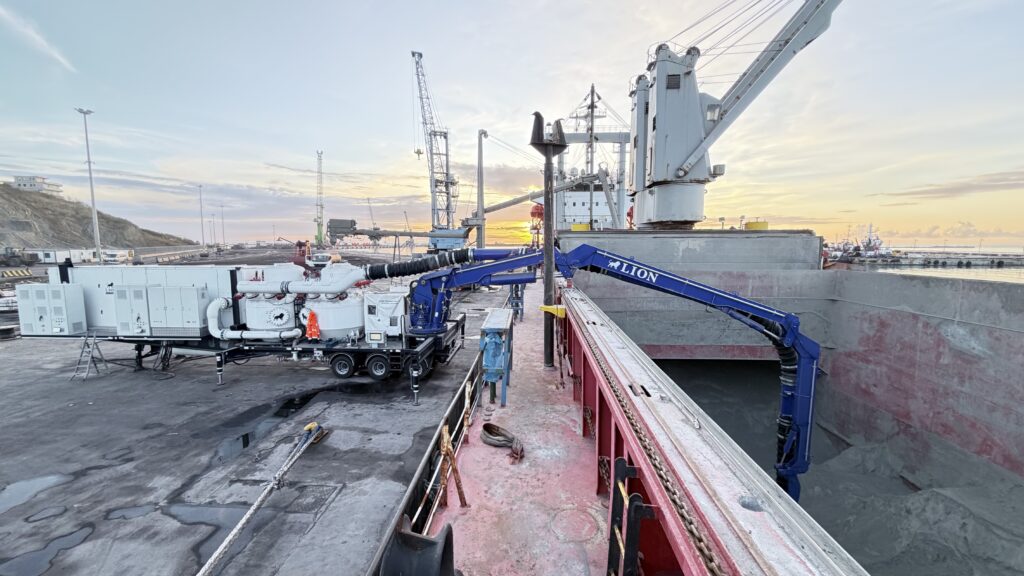
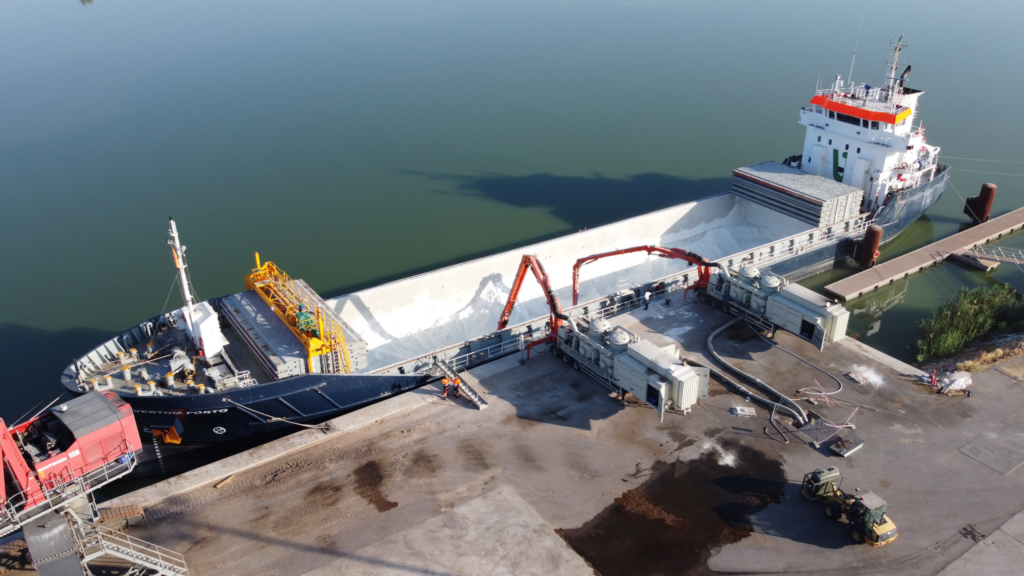
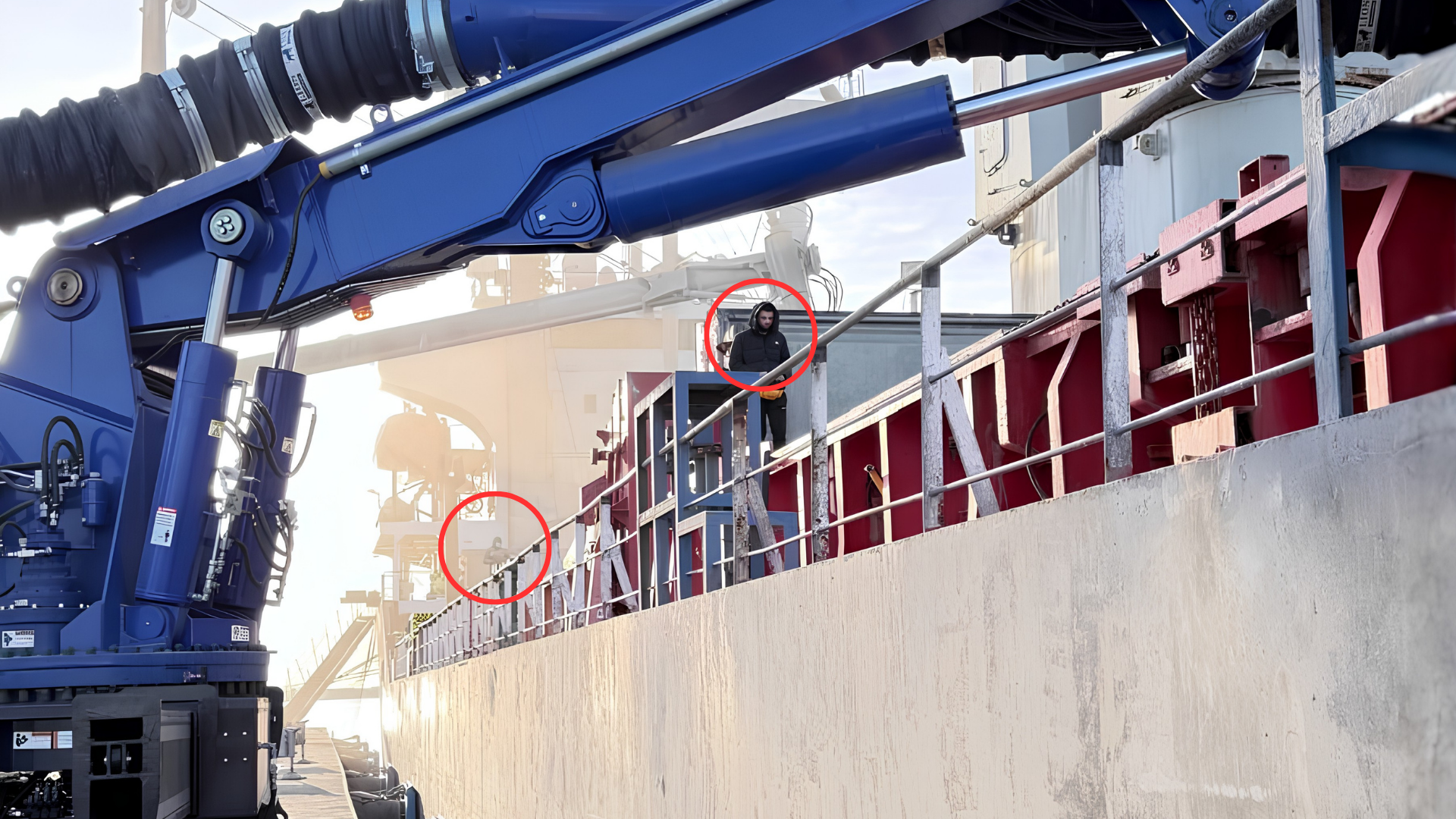
Pneumatic unloading systems transport material through an enclosed pipeline using vacuum or pressure. By keeping the material contained throughout much of the conveying process, dust escape can be significantly reduced.
For fine powders such as cement, this can contribute to a cleaner and more controlled unloading environment.
Why does dust control matter?
Cement dust can become airborne during handling and transfer, making dust control an important consideration for both operators and terminal operations.
Effective containment can support:
- Reduced operator exposure to airborne dust
- Cleaner working areas
- Reduced product loss
- Controlled material transfer
- Reduced dust emissions around the terminal
The most suitable unloading technology will always depend on factors such as the material, vessel, capacity requirements and terminal layout.
Both mechanical and pneumatic systems have their applications. But where enclosed material transport and dust control are important priorities, pneumatic conveying offers clear advantages.
Enclosed pneumatic ship unloading
Lion Bulk Handling develops pneumatic ship and barge unloading solutions that move dry bulk materials through enclosed conveying systems.
By combining controlled airflow, pressure and material handling expertise, these systems are designed to create a reliable material flow between the vessel and the receiving facility while keeping the product contained.
Reliable unloading is not only about how much material you can move, but also about how well you control it.
Discover Pneumatic Ship Unloading
Learn more about enclosed pneumatic conveying solutions for cement and other dry bulk materials.