Reducing the carbon footprint of cement production requires more than cleaner energy and improved manufacturing processes. One of the most important approaches is reducing the amount of clinker used in cement. But as clinker content decreases, a new challenge emerges: finding, sourcing and transporting the materials needed to replace it.
In Part 3 of our EXPLAINED series, we explore the growing role of Supplementary Cementitious Materials (SCMs), their changing availability and how they could reshape the global cement supply chain.
What Are Supplementary Cementitious Materials (SCMs)?
Clinker is a key component of conventional cement, but its production is responsible for a significant share of the industry’s carbon emissions.
One way to reduce these emissions is by replacing part of the clinker with alternative materials, commonly known as Supplementary Cementitious Materials (SCMs).
These materials can help lower the clinker content of cement while maintaining the performance required for construction applications.
Important materials used in lower-clinker cement formulations include:
- Fly Ash: A by-product traditionally obtained from coal-fired power plants.
- Ground Granulated Blast-Furnace Slag (GGBFS): A material produced from blast-furnace slag originating in the steel industry.
- Natural Pozzolans: Naturally occurring materials that can contribute to cementitious performance.
- Calcined Clay: Suitable clay materials thermally processed to develop reactive properties.
- Ground Limestone: Finely ground limestone that can partially replace clinker in suitable cement formulations.
While these materials offer opportunities to reduce clinker consumption, their origins, availability and processing requirements differ significantly.
The Changing Availability of SCMs
As the cement industry moves towards lower-clinker formulations, demand for alternative cementitious materials could increase substantially.
However, some of the most established SCMs depend on industries that are themselves undergoing major changes.
Fly ash has traditionally been supplied by coal-fired power plants. As these facilities close, the production of fresh fly ash decreases. Imports and the recovery of existing ash deposits could help supplement supply.
Blast-furnace slag faces a similar challenge. Its availability is closely linked to conventional steel production, meaning the amount that can be supplied is ultimately limited by developments in the steel industry.
As a result, other materials may become increasingly important.
Natural pozzolans offer potential alternatives, with sources found in regions including Turkey, Greece, Italy and Iceland. Calcined clay provides another opportunity, as suitable clay materials can be processed at lower temperatures than conventional clinker and used in lower-carbon cement formulations.
The challenge is not simply identifying alternatives. It is making sufficient quantities of suitable materials available to an industry operating at an enormous scale.
How SCMs Could Transform Cement Logistics
The transition towards lower-clinker cement could have significant consequences for the way raw materials are transported, processed and stored.
Traditional cement plants are often located close to limestone quarries, allowing a major raw material to be sourced locally.
Lower-clinker cement production, however, may depend on multiple materials originating from different regions, sometimes over much longer distances.
This creates new requirements throughout the supply chain, including:
- Increased bulk shipping of cementitious materials.
- Additional import terminals and transshipment facilities.
- Greater grinding, processing and storage capacity.
- Flexible bulk handling systems capable of handling materials with different physical properties.
- More complex distribution networks connecting suppliers, producers and terminals.
Existing cement terminals may increasingly handle SCMs alongside conventional cement, while cement carriers could transport a broader range of cementitious materials.
Large hub terminals could also play an important role, receiving imported materials in bulk carriers before distributing them through coastal shipping, inland waterways, rail or road transport.
These developments could change how cement-related materials move through international supply chains.
The Role of Bulk Handling in Lower-Carbon Cement
As material flows become more complex, efficient handling and transportation will remain essential.
Different SCMs can have different characteristics, including particle size, bulk density, flowability and moisture sensitivity. These properties influence how materials can be unloaded, conveyed and stored.
For ports, terminals and cement producers, adapting to a broader range of materials may require additional infrastructure and flexible handling configurations.
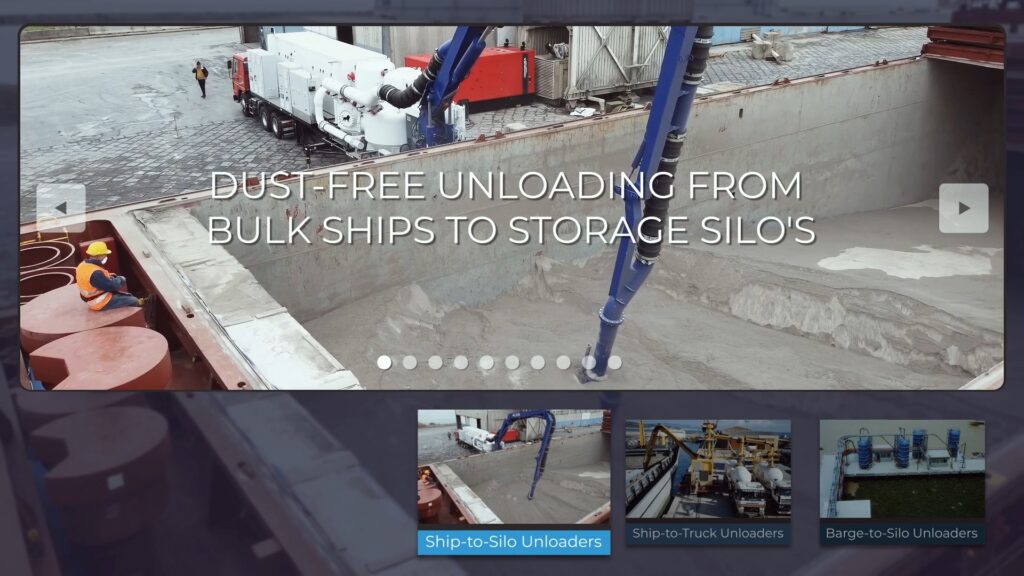
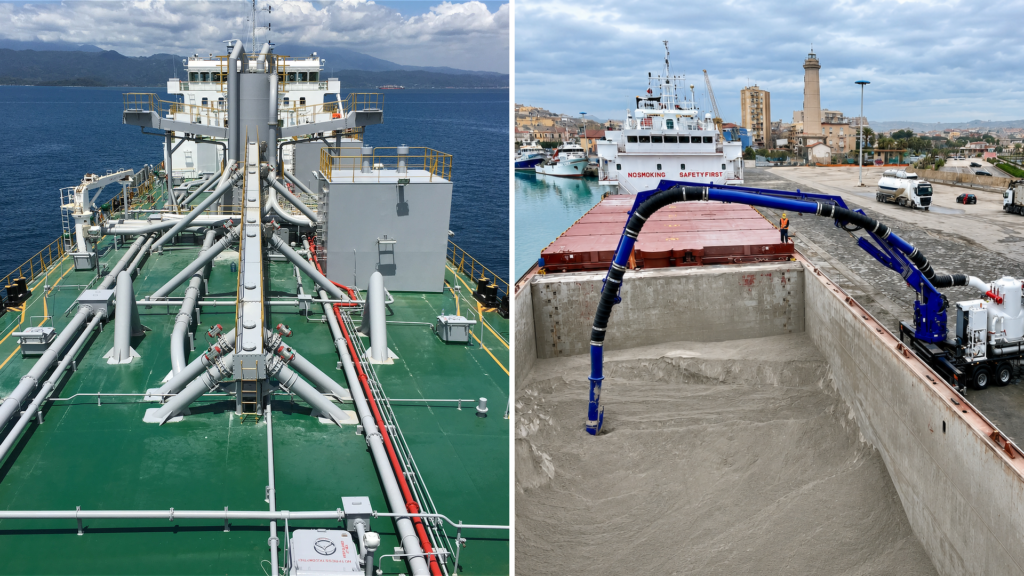
Pneumatic ship unloading systems, conveying solutions and storage infrastructure can all play a role in supporting these changing requirements.
At Lion Bulk Handling, we develop dry bulk handling solutions for marine, port and terminal applications, supporting the efficient transfer of bulk materials throughout the supply chain.
The Next Carbon Challenge: Moving the Materials
Reducing clinker consumption changes more than the composition of cement.
It also affects the industrial supply chains responsible for delivering the materials needed to produce it.
The future of lower-carbon cement will depend not only on identifying suitable clinker replacements, but also on ensuring these materials are available at the right quality, in the right quantities and at the right locations.
Because the next carbon challenge is not only what goes into cement. It is how we move it.
Watch EXPLAINED Part 3: The Carbon Challenge in Cement
In this third episode of EXPLAINED by Lion, we explore how Supplementary Cementitious Materials could reshape cement production and the logistics infrastructure supporting it.
Discover where SCMs originate, why their availability is changing and what increasing demand could mean for bulk shipping, import terminals, material storage and handling systems.
Watch the latest episode and discover the engineering challenges behind the transition towards lower-carbon cement.
Follow EXPLAINED by Lion for more insights into industrial processes, bulk handling, technology and engineering.