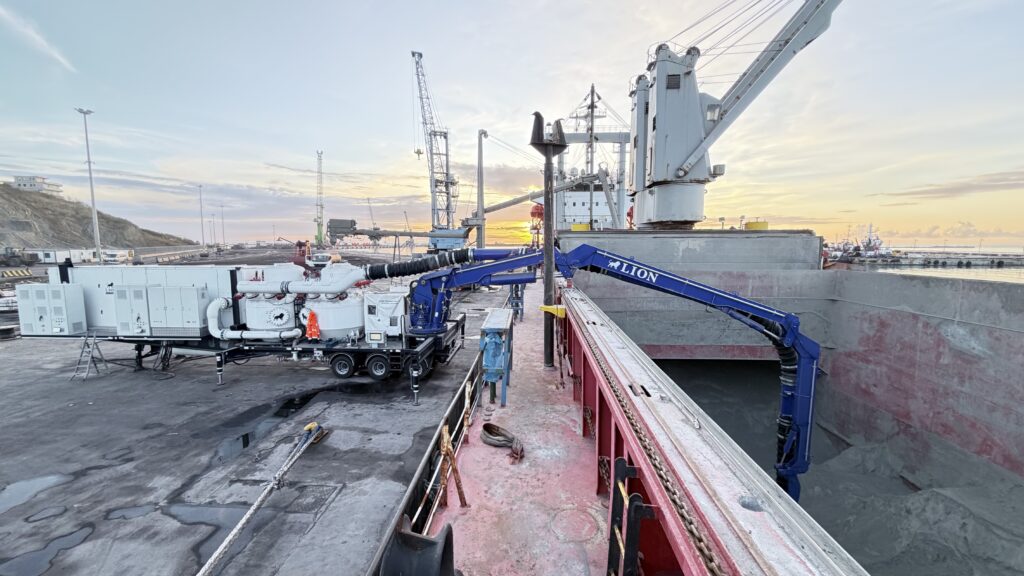
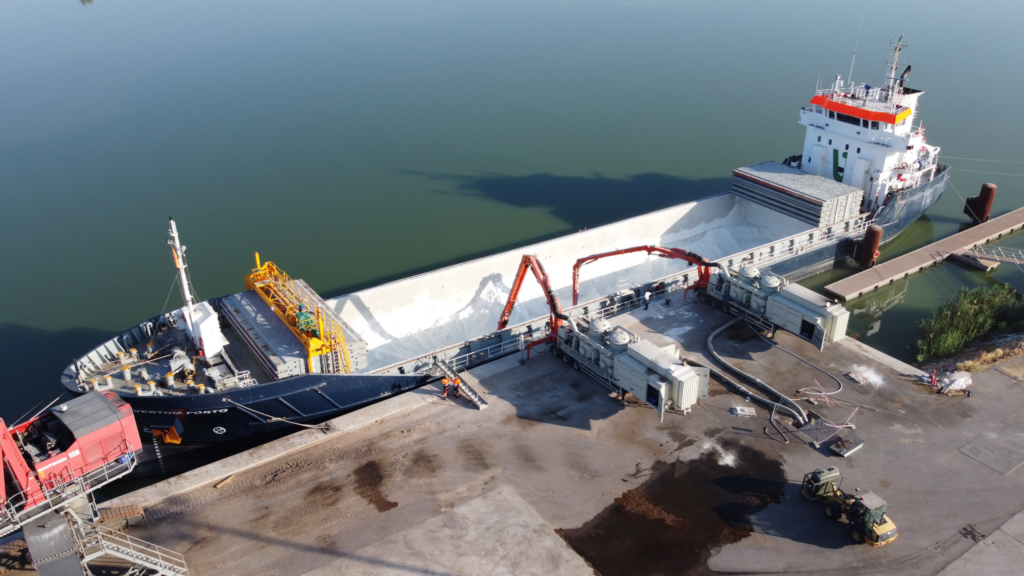
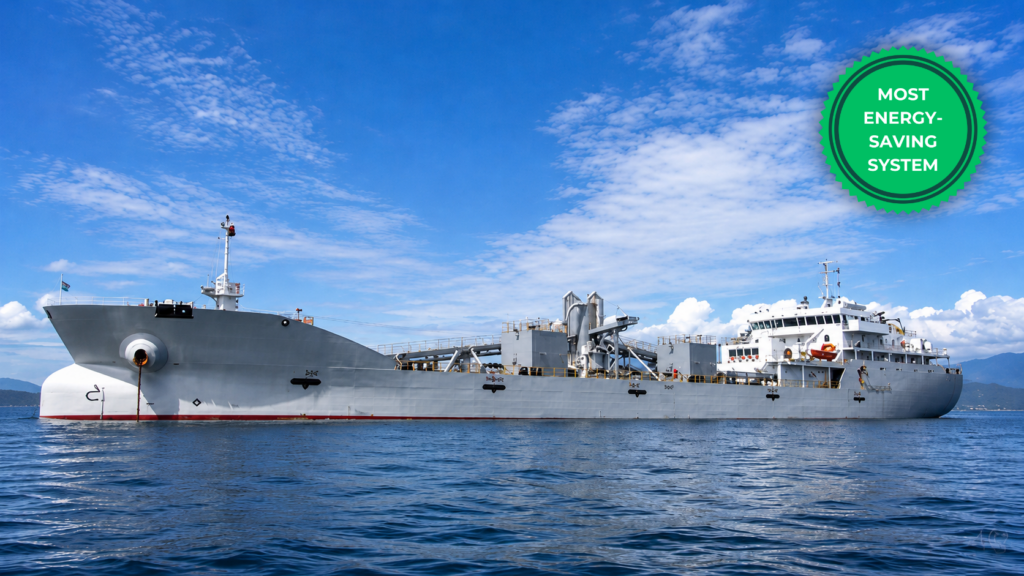
Pneumatic conveying is a method of transporting powders and granular materials through pipelines using air pressure or vacuum. Instead of belts, screws or buckets, controlled airflow moves materials such as cement, grain, plastic pellets and minerals from one point to another.
In this episode of EXPLAINED by Lion, we explain how pneumatic conveying works, the difference between pressure and vacuum systems, and why airflow and material behaviour are critical to reliable conveying.
How does pneumatic conveying work?
A pneumatic conveying system starts by feeding bulk material from a storage, processing or unloading point into a pipeline.
Air then moves the material through the system:
- Pressure conveying uses positive air pressure to push material through the pipeline.
- Vacuum conveying uses negative pressure to pull material toward its destination.
At the end of the conveying line, the material is separated from the air using equipment such as a filter, cyclone or receiving vessel.
What is the difference between dilute and dense phase conveying?
Two common methods are dilute phase and dense phase pneumatic conveying.
In dilute phase conveying, particles are suspended in fast-moving air and travel through the pipeline at relatively high velocity.
In dense phase conveying, material moves at a lower velocity in more concentrated sections or plugs.
Which method is most suitable depends on the material being handled and the requirements of the application.
Why are airflow and material behavior important?
Pneumatic conveying is more than simply blowing material through a pipe.
Air velocity, pressure and material flow must be carefully controlled. Too little airflow can allow material to settle and potentially block the pipeline. Too much airflow can increase energy consumption, product degradation and wear inside the system.
The design must therefore consider properties such as particle size, flow behavior, moisture, abrasiveness and required conveying capacity.
Why is pneumatic conveying used in bulk handling?
Pneumatic conveying keeps bulk materials inside an enclosed pipeline, making it an effective solution for controlled material transport in many industrial and bulk handling applications.
Behind every reliable pneumatic conveying system is a carefully engineered balance of airflow, pressure, velocity and material behavior.
Watch How Pneumatic Conveying Works | EXPLAINED by Lion
See how air becomes the driving force behind bulk material transport in this episode of EXPLAINED by Lion.