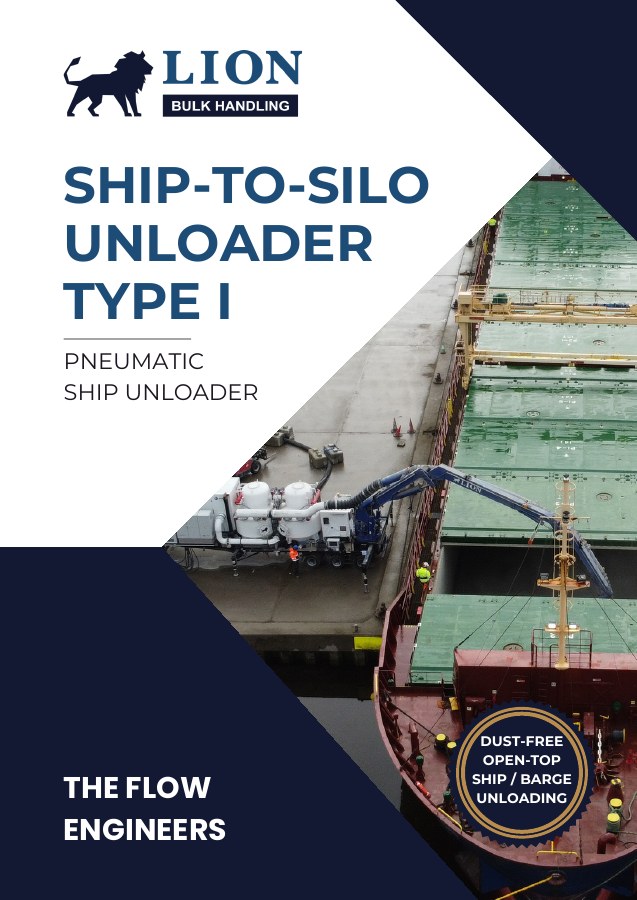
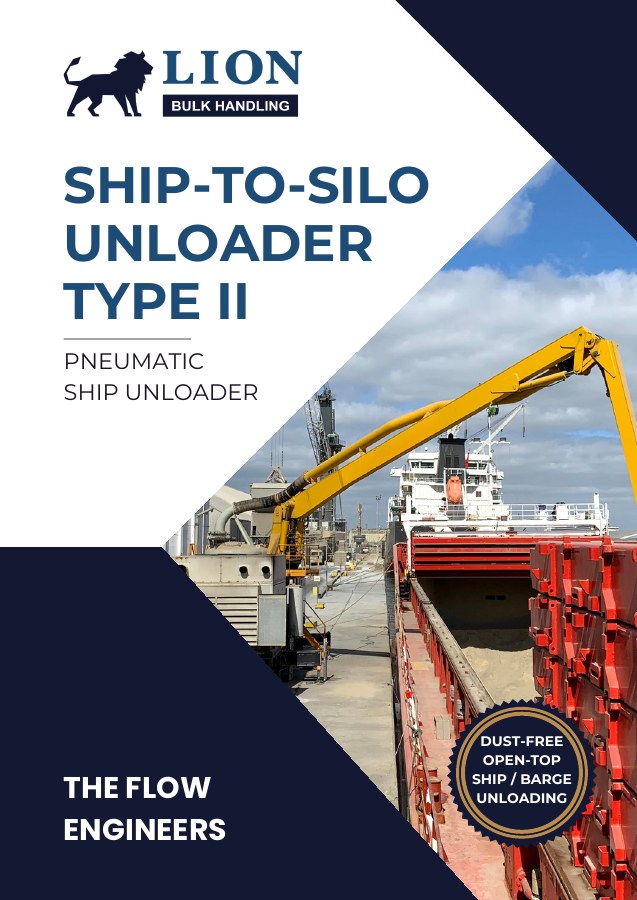
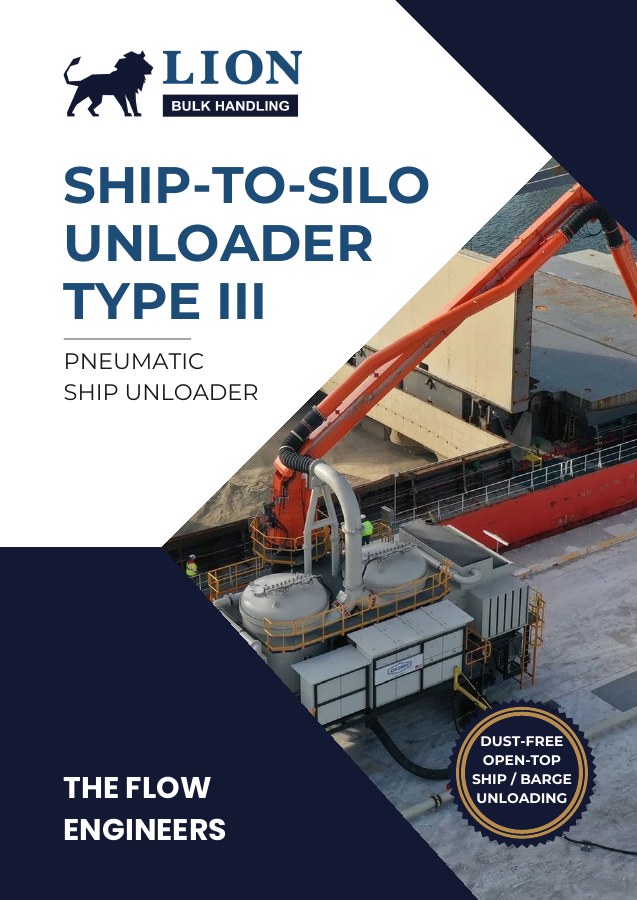
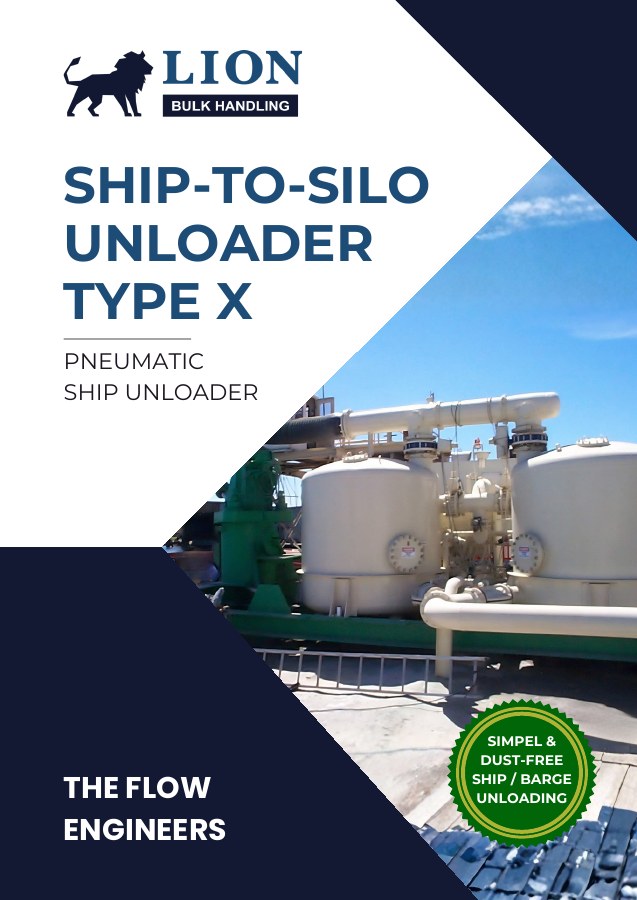
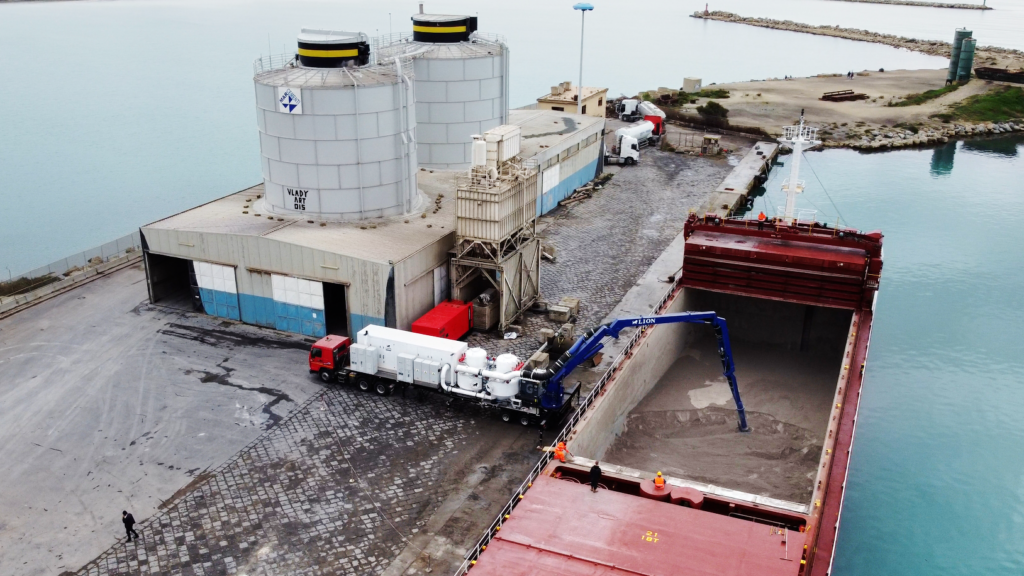
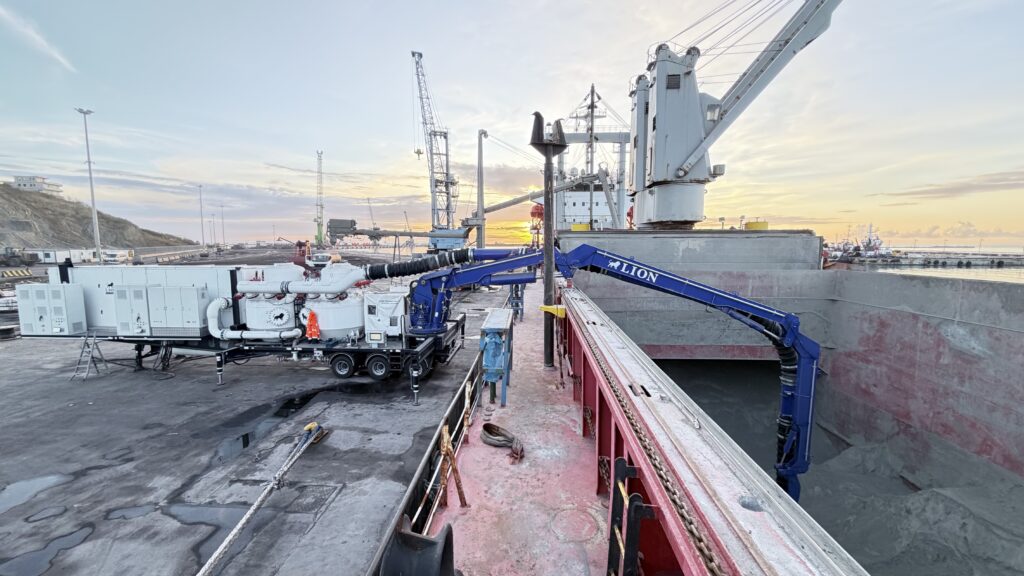
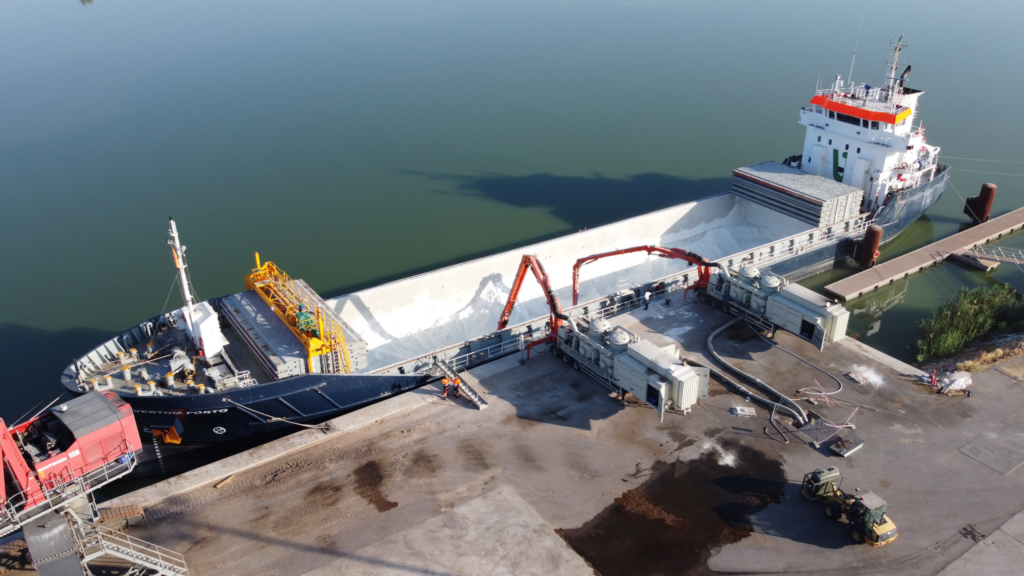
The nozzle plays an important role in the performance of a pneumatic cement ship unloader. Choosing between a static or rotating nozzle depends on factors such as material condition, required unloading capacity, vessel size and operational requirements.
There is no single best option. The right configuration depends on how the unloader needs to perform in real operating conditions.
Two Nozzle Configurations
Static nozzle
A static nozzle is a simple and robust solution with relatively low maintenance requirements.
It can be well suited to free-flowing cement, but because the nozzle itself does not actively mobilise the material, the unloading arm may need to be repositioned more frequently as the cargo level changes.
For applications where simplicity and low mechanical complexity are important, a static nozzle can provide an effective solution.
Rotating nozzle
A rotating nozzle actively helps loosen and mobilise cement around the suction point.
This can be particularly valuable when cement has compacted during transportation or when higher unloading performance is required. By mobilising more material around the nozzle, fewer movements of the unloading arm may be needed.
The trade-off is additional mechanical complexity, with higher investment and maintenance requirements compared with a static configuration.
Which nozzle is right for your ship unloader?
The choice should always be based on the complete unloading operation.
Important considerations include:
- Material condition and flowability
- Required unloading capacity
- Vessel size
- Expected level of material compaction
- Maintenance requirements
- Operational preferences
Static nozzles can provide a straightforward solution for free-flowing materials, while rotating nozzles can offer advantages when more demanding material conditions or higher unloading rates need to be handled.
The best nozzle is the one that matches the vessel, material and operating requirements of the terminal.
Discover Ship Unloader Configurations
Looking for the right nozzle and pneumatic ship unloader configuration for your operation?
Contact Lion Bulk Handling to discuss your material, vessel and unloading requirements.