In today’s bulk handling industry, efficiency, material logistics, safety, and environmental compliance are key drivers…

Closed Hatch vs. Open Hatch Cement Handling
Cement bulk handling for vessels and barges comes in different concepts, but they mainly fall into two categories: Closed Hatch and Open Hatch systems. Each has advantages and trade-offs regarding investment, labor, energy efficiency, maintenance, and downtime.
Breaking It Down:
Closed Hatch Pneumatic Self-Discharging Cement Carrier
- Fully enclosed system—no dust pollution
- Lower maintenance (no moving parts on the vessel floor)
- Less workforce needed (the system unloads itself)
- Higher efficiency—continuous operation without vessel movement
- Weather-independent—operations can continue in all conditions
- Requires vessel modification (dedicated design)
Go to https://www.lionbulkhandling.com/self-discharging-ships/ for our system configurations.
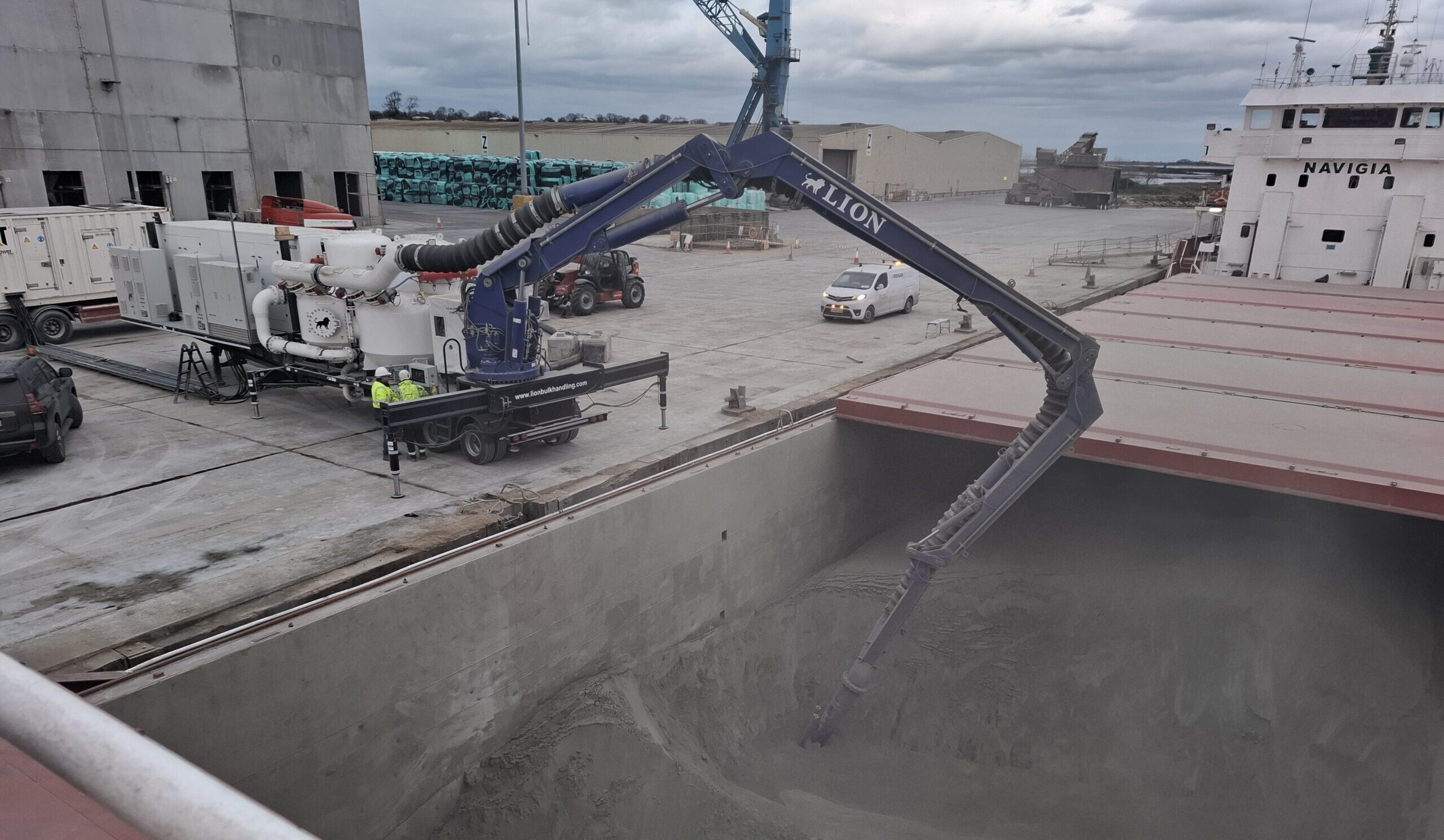
Open Hatch Pneumatic Ship Unloader
- No dedicated vessel is necessary.
- One-time investment for unloading multiple bulk carriers
- More flexible for different cargo types
- More cleaning effort required
- More labor-intensive (minimum two crew members)
- Weather-dependent—rain will halt operations
Go to https://www.lionbulkhandling.com/ship-to-silo-unloaders/ for our system configurations.
Key Takeaways
- When evaluating cement bulk handling solutions, choosing between a Closed Hatch Pneumatic Self-Unloading Cement Carrier and an Open Hatch Pneumatic Ship Unloader depends on multiple operational and financial factors.
The Closed Hatch system offers a more efficient, cleaner, and safer logistics solution. A fully enclosed pipeline system eliminates dust pollution, minimizes labor requirements, and ensures continuous high-capacity unloading withoutvessel shifts or weather disruptions. While vessel modifications are required, the long-term benefits in operational efficiency, cost savings, and safety outweigh the initial investment.
- On the other hand, the Open Hatch system provides flexibility for handling different materials and uses general-purpose vessels. However, it comes with higher labor costs, dust emissions, vessel movement requirements, and weather dependency, leading to lower unloading efficiency and increased downtime.Contact our Lion team to find out which application suits your dry bulk handling needs.
Related Posts